
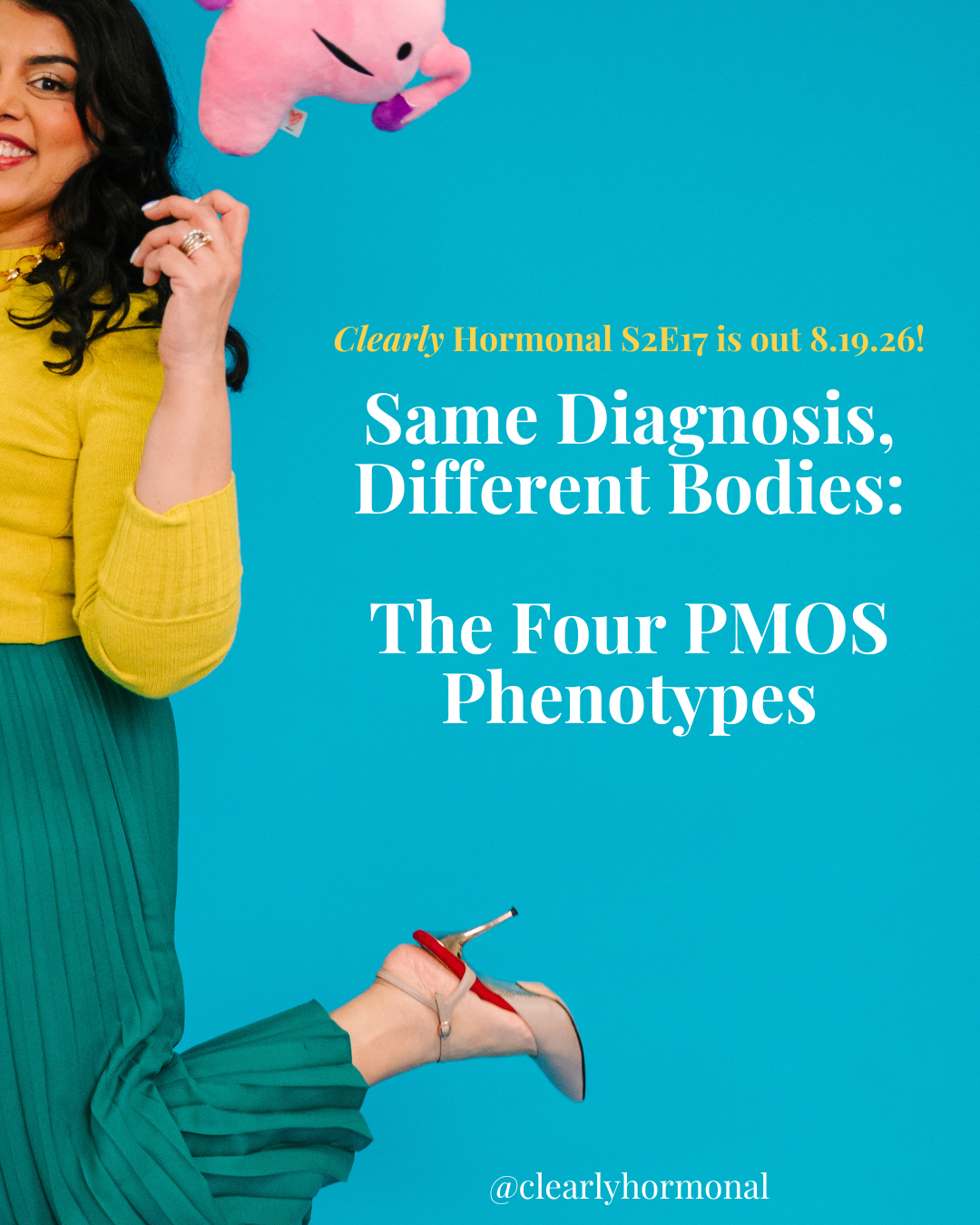
S2E17: Not All PMOS is the Same: The Four Phenotypes Explained
Welcome to Clearly Hormonal
(formerly Reset Recharge)
Two women get the same diagnosis, PMOS (formerly known as PCOS), and end up with completely different symptoms. One has irregular periods, acne, and high androgens. The other has none of that, just an ultrasound finding. How can that be the same condition?
In this episode, Dr. Komal Patil-Sisodia breaks down the Rotterdam criteria, the three features used to diagnose PMOS, and explains why you only need two of the three to qualify. That single fact is the reason PMOS shows up as four distinct phenotypes (A, B, C, and D), each with its own symptom pattern and metabolic risk profile.
You'll learn:
What hyperandrogenism, ovulatory dysfunction, and polycystic ovarian morphology actually mean (without the jargon)
The four PMOS phenotypes and which one carries the highest, and lowest, metabolic risk
Why insulin resistance, not BMI, may be the real driver of your risk
Why phenotype D ("the mild one") still deserves your attention
Three questions to bring to your next appointment to get more personalized care
Whether you were diagnosed years ago or are newly navigating a PMOS diagnosis, this episode gives you language to better understand your own body, and better questions to ask the people caring for it.
Same Diagnosis, Different Bodies: What Your PMOS Phenotype Actually Means
By Dr. Komal Patil-Sisodia, MD | Eastside Menopause & Metabolism
Picture two women in their late twenties, diagnosed with PMOS (formerly known as PCOS) within a few months of each other. The first has irregular periods, jawline acne, unwanted hair growth, and elevated androgens on her labs. The second has regular periods, clear skin, and normal hormone levels; she only found out something was going on because an ultrasound showed a polycystic-appearing ovary.
Same diagnosis. Two completely different bodies. If you've ever compared notes with a friend who has PMOS and thought, how can we possibly have the same condition? there's a real, clinical reason for that.
The Three Ingredients
PMOS is diagnosed using the Rotterdam criteria, which looks at three features:
Hyperandrogenism: elevated androgen levels, or clinical signs androgens are having a stronger effect on the body (acne, unwanted hair growth, scalp thinning), whether or not it shows up clearly on labs.
Ovulatory dysfunction: irregular or absent ovulation, often showing up as unpredictable or missing periods.
Polycystic ovarian morphology: a higher number of small follicles or larger-than-expected ovaries seen on ultrasound. (Despite the name, this isn't about ovarian cysts.)
The key detail most people are never told: you only need two of these three features to be diagnosed with PMOS. Not all three. That single rule is why PMOS can look so different from person to person.
The Four Phenotypes
Depending on which two (or three) features you meet, you fall into one of four recognized phenotypes:
Phenotype A, "The Full House." All three criteria. This group carries the highest metabolic risk, including risk for insulin resistance, diabetes, and cardiovascular disease.
Phenotype B, hyperandrogenism plus ovulatory dysfunction, normal ultrasound. Metabolic risk here can look a lot like Phenotype A, even without the classic ovarian appearance, a reminder that the ultrasound isn't what's driving the risk.
Phenotype C, hyperandrogenism plus polycystic morphology, with regular ovulation. Metabolic risk falls somewhere in the middle.
Phenotype D, ovulatory dysfunction plus polycystic morphology, without hyperandrogenism. The mildest phenotype metabolically, but still a real diagnosis with real implications.
Why This Matters More Than a Label
The biggest reason phenotype matters clinically is insulin resistance: how well your cells respond to insulin. A 2025 study found that insulin resistance predicted PMOS phenotype, and once researchers accounted for it, BMI was no longer a significant predictor. In other words, two people with the same BMI can carry very different metabolic risk, and someone in a thinner body can still have significant insulin resistance.
That matters most for Phenotypes A and B: a lower BMI does not mean you're protected.
If You're Phenotype D
If your symptoms are less visible (no acne, no excess hair growth, normal androgens), it's easy to wonder if your diagnosis "really counts." It does. Ovulatory dysfunction is still ovulatory dysfunction, and it can still affect your cycle and your fertility plans. Lower risk is real, but lower risk isn't zero risk, and it isn't a reason to skip follow-up care.
What To Do With This Information
Ask which phenotype you have, or which Rotterdam criteria you met at diagnosis: hyperandrogenism, ovulatory dysfunction, polycystic morphology, or all three.
Ask what your phenotype means for screening: insulin resistance, lipids, blood pressure, and how often those should be checked.
Don't let BMI end the conversation. Ask for metabolic screening based on what's happening inside your body, not what your body looks like.
PMOS isn't only about periods, and it isn't only about fertility. Your phenotype is one more piece of information that can help you ask sharper questions, and get care that's actually built for your body.
Listen to the full episode wherever you get your podcasts, and if you've got your own “is this actually hormonal?” question, send it in: DM @drpatilsisodia on Instagram or TikTok, or use the fan mail link on the show page.
Follow Dr. Komal Patil-Sisodia:@drpatilsisodia on Instagram and TikTok
This content is for educational purposes only and does not constitute personalized medical advice. Please discuss your specific health concerns with your own healthcare provider.