
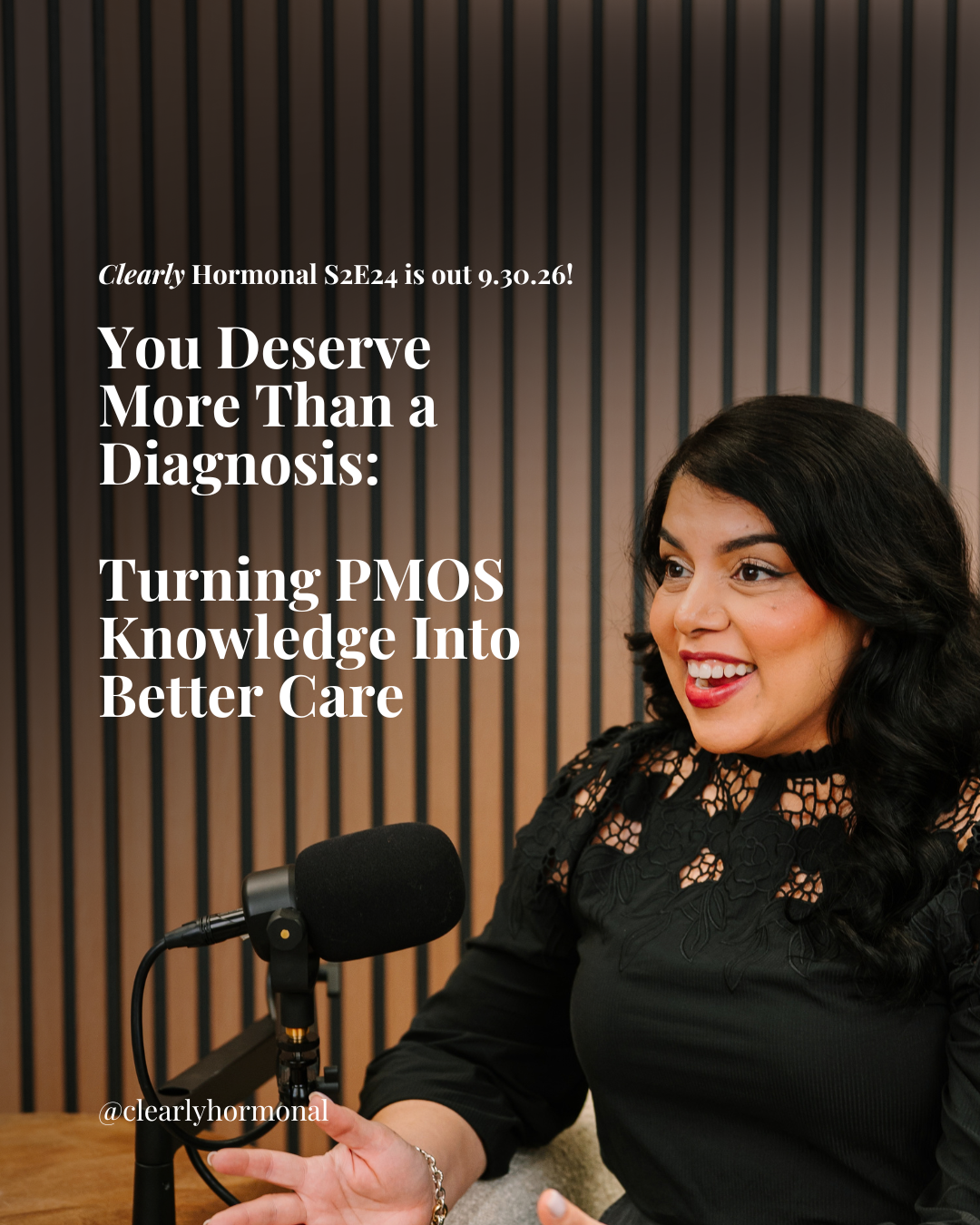
S2E24: You Deserve More Than a Diagnosis: Turning PMOS Knowledge Into Better Care
Welcome to Clearly Hormonal
About one in eight women lives with PMOS, polyendocrine metabolic ovarian syndrome, formerly called PCOS. It is one of the most common hormone conditions there is, and still one of the most misunderstood, by patients and by many clinicians.
In this final episode of September PMOS Awareness Month, Dr. Komal Patil-Sisodia explains why the name changed, why the condition is about far more than ovarian cysts, and why the metabolic and cardiovascular pieces so often get missed when a visit stays focused on periods, acne, or hair growth. She also shares what the data shows about diagnosis delays and disparities, and a piece of her own story.
Then she moves from the science to the practical: what to ask, what to track, and what to do when you raise a reasonable concern and do not get a useful answer. She introduces her new six-module course, The PMOS Conversation You Deserve, built to help you walk into your next appointment better informed and better prepared.
You Deserve More Than a Diagnosis: Turning PMOS Knowledge Into Better Care
By Dr. Komal Patil-Sisodia, MD | Eastside Menopause & Metabolism
About one in eight women lives with PMOS. It is associated with a higher risk of type 2 diabetes and cardiovascular risk factors like high blood pressure and abnormal cholesterol, and for many women the first signs appear decades before menopause. You would think a condition that common, with effects that can reach across a woman's whole life, would be recognized early and treated comprehensively. Too often, it is not.
PMOS stands for polyendocrine metabolic ovarian syndrome. You may know it as PCOS. As I wrap up my September PMOS Awareness Month on Clearly Hormonal, here is what I most want you to know.
Why the name changed
The new name came out of a major consensus paper published in The Lancet earlier this year, and it was not simply a rebrand. The old name put the focus on ovarian cysts, even though cysts are not required for diagnosis and the condition reaches far beyond the ovaries. The new name is meant to reflect what the condition actually is: hormonal, metabolic, and relevant across a lifetime.
It is not just a period problem
Many people first notice PMOS through irregular periods, acne, or new hair growth, often beginning in the teen years. Those symptoms are real and they matter. But they are only part of the picture.
PMOS also carries important metabolic implications: insulin resistance, blood sugar, cholesterol, blood pressure, and long-term cardiovascular risk. These deserve attention even when nothing looks wrong at the time of diagnosis. When a visit stays focused on periods, acne, or hair growth, that conversation gets missed.
It helps to think of PMOS as a condition that evolves. It may show up in adolescence as irregular periods or acne. In your 20s or 30s, fertility may become part of the conversation. And the story does not end when the reproductive years do. The hormonal and metabolic pieces can stay relevant through perimenopause and beyond.
Why awareness matters: the diagnosis gap
In one of the largest international studies of diagnostic experience, about one in three women waited more than two years for a diagnosis, and nearly half saw at least three healthcare professionals before getting one. I was one of them. My symptoms started when I was 18, and it took years. It took getting all the way through my own medical training before I had the language and the confidence to push for real answers about my own body.
There are disparities, too. In one large safety net health system study, Black women and patients covered by Medicaid or charity care were significantly more likely to meet criteria for PMOS without having the diagnosis documented. This is not only a knowledge problem. Access and inequity are part of the story.
Some people are told to just lose weight. Some are told their labs are normal when the labs that were run were not the right ones. Some are never told about the metabolic or cardiovascular risk at all.
From knowing to doing
Knowing the science is one thing. Knowing what to do with it in a doctor's office is another. In my practice I see this constantly: a patient has done her research, understands a lot about PMOS, and still leaves appointments feeling unheard because no one ever taught her how to turn what she knows into a conversation that gets her somewhere.
Nobody hands you a script for asking whether you need a metabolic screening instead of only a hormone panel. Nobody tells you which questions are reasonable to ask or what to track over time. And nobody prepares you for the appointment where you raise your risk for diabetes or heart disease and hear, "Let's not worry about that right now."
You should not have to become an expert just to get appropriate care. But knowing what questions to ask, what information matters, and when to ask for a second look can make those conversations more productive.
The PMOS Conversation You Deserve
That gap is why I built a six-module course, The PMOS Conversation You Deserve. It covers what PMOS actually is, the connection between hormones, metabolism, and cardiovascular health, and how the condition changes across life stages. The heart of it is practical: what to ask, what to track, how to build a plan with your healthcare team, and what to do when you hit pushback.
It includes a comprehensive workbook designed to go with you to appointments, and three months of live monthly Q&A sessions with me.
Pre-order opens October 7, with introductory pricing through October 13. Regular pricing begins October 14, and our first live Q&A is October 21. Join the list here.
The bottom line
Awareness is a starting point, not a finish line. Knowing the name matters. Understanding the risks matters. But the real goal is knowing what that information means for you and feeling equipped to have a better conversation about your health. You deserve more than a diagnosis. You deserve to understand what comes next.
Follow Dr. Komal Patil-Sisodia:@drpatilsisodia on Instagram and TikTok
This content is for educational purposes only and does not constitute personalized medical advice. Please discuss your specific health concerns with your own healthcare provider.