

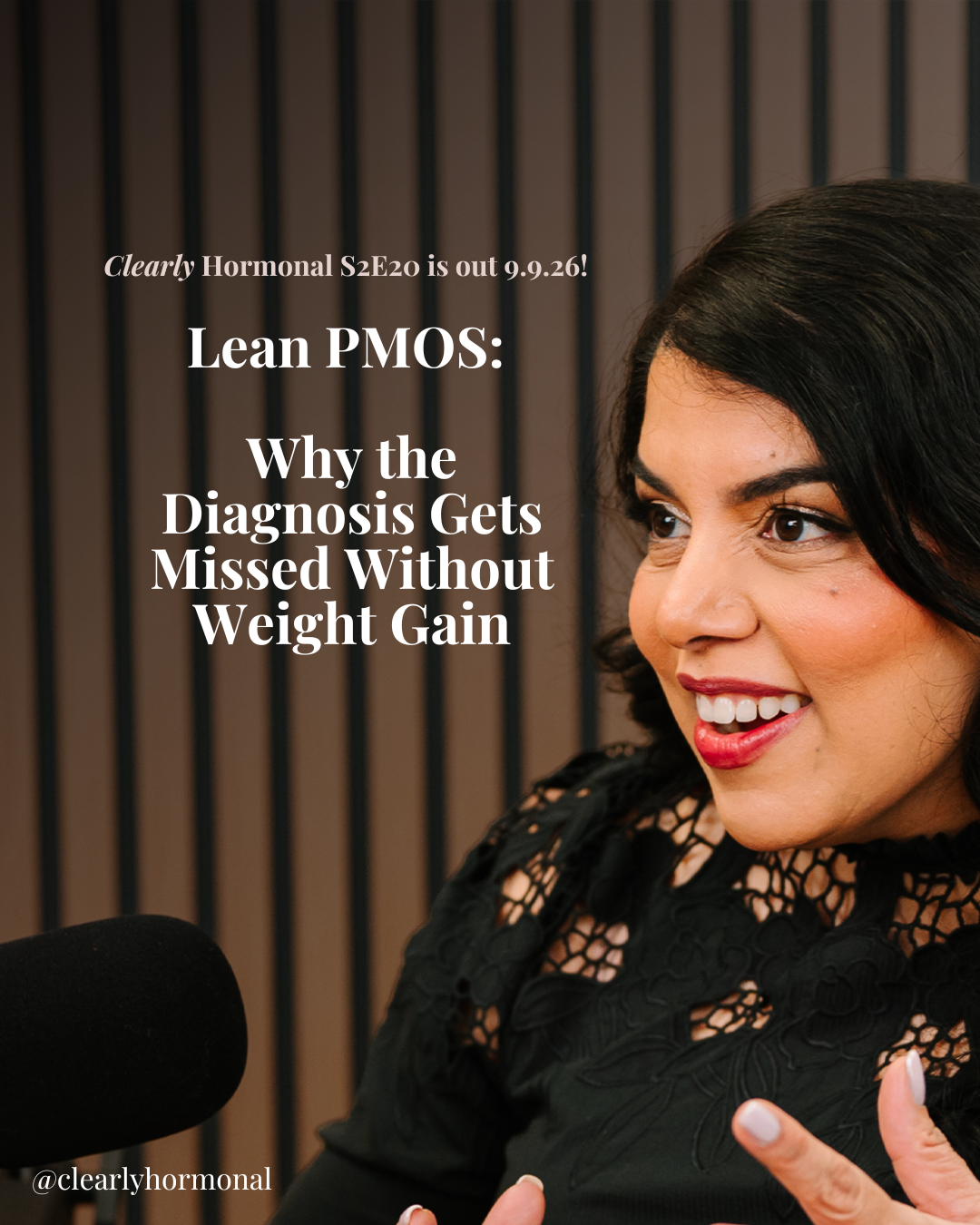
S2E20: Lean PMOS: Why the Diagnosis Gets Missed Without Weight Gain
Welcome to Clearly Hormonal
Many people picture PMOS (polyendocrine metabolic ovarian syndrome, formerly known as PCOS) as a condition tied to weight gain. But the diagnostic criteria never mention body size at all, and a significant number of people with PMOS have a completely normal BMI. In part two of our PMOS Awareness series, Dr. Patil-Sisodia breaks down “lean PMOS”: what it looks like, why it is so often missed, and why the metabolic risk is just as real even when the outside doesn't show it.
In This Episode
Why PMOS became associated with a specific body type, and why that picture was never the diagnosis itself
The three actual diagnostic criteria: irregular or anovulatory cycles, elevated androgens (DHEAS, testosterone), and polycystic ovarian morphology on ultrasound
What lean PMOS symptoms look like: irregular periods, acne, facial and body hair growth, scalp thinning
“Normal weight obesity”: how insulin resistance and visceral fat can hide behind a normal-looking exterior
The three-part pattern that causes lean PMOS to slip through the cracks in clinical practice
Why an undiagnosed lean PMOS patient loses out on cardiometabolic monitoring, not just a menstrual explanation
What needs to change: for clinicians, dropping body size as a screening filter; for patients, presenting symptoms as a pattern instead of one at a time
Lean PMOS: Why the Diagnosis Gets Missed Without Weight Gain
By Dr. Komal Patil-Sisodia, MD | Eastside Menopause & Metabolism
When most people picture PMOS, otherwise known as polyendocrine metabolic ovarian syndrome (formerly PCOS), they picture someone struggling with their weight. That mental image is so common that it quietly shapes who gets tested, who gets believed, and who gets sent home without an answer. But a meaningful number of people with PMOS are at a completely normal body weight, and because they do not fit the picture, they can wait years for a diagnosis, if they get one at all.
Where the PMOS Body Type Came From
PMOS is closely linked to insulin resistance, and insulin resistance often shows up alongside weight gain, particularly around the midsection. Because that pattern is so common, it became the default image of PMOS in medical training, in patient education, and in the broader culture. But that image describes a common presentation. It does not describe the diagnosis itself.
PMOS is defined by three criteria: irregular or anovulatory cycles, elevated androgen hormones such as DHEAS and testosterone, and a specific pattern on ovarian ultrasound known as polycystic ovarian morphology. Body weight is not one of the three. A patient at a normal BMI can meet every single criterion just as clearly as a patient in a larger body.
What Lean PMOS Actually Looks Like
The reproductive symptoms are largely the same regardless of body size: irregular or missing periods, acne that persists from the teen years into adulthood, increased hair growth on the face, chest, or back, and thinning hair at the scalp. These symptoms come from androgen hormones, not from body size.
The metabolic picture can look different on the surface, but it is not necessarily healthier underneath. Lean patients with PMOS can still develop insulin resistance. Their bodies simply handle the extra insulin differently, often storing fat in less visible places such as around the abdominal organs, while looking like a normal BMI everywhere else. This is sometimes called normal weight obesity, and it is exactly the kind of pattern a scale or a quick look in an exam room will never catch.
Why the Diagnosis Slips Through the Cracks
A few overlapping issues compound each other here. First, patients often do not present their symptoms as a pattern. Irregular periods might come up with a gynecologist, unwanted facial hair with an esthetician, and adult acne with a dermatologist, with no single provider seeing all three together. Second, body weight is often used as an informal filter for who “looks like” they might have PMOS, so a normal-BMI patient may be offered other explanations first, such as stress, a birth control side effect, or simply being someone who runs irregular. Third, patients themselves may never consider PMOS as a possibility if everything they have heard about the condition ties it to weight they have never struggled with.
Put those three things together, and the result is longer delays to diagnosis, more specialist visits before getting an answer, and more time spent being told nothing is wrong.
Why This Matters
PMOS is a cardiometabolic condition. It affects the heart and the metabolism, not just the reproductive system, regardless of what a patient's body looks like. A lean patient with undiagnosed PMOS is building the same insulin resistance and cholesterol changes as anyone else with the diagnosis, just without anyone watching, because nothing about their appearance triggered the screening conversation. Without a diagnosis, they miss out on the blood work, the monitoring, and the long-term heart health conversation that a diagnosis would normally set in motion.
What Should Change
For clinicians: stop using body size as a filter for who gets worked up for PMOS. Irregular cycles and signs of elevated androgens are the signal to evaluate, regardless of what a patient weighs.
For patients: if you have irregular periods, adult acne, increased hair growth, or scalp thinning, and you have been told it is just stress or just genetics without a real workup, it is reasonable to ask specifically about PMOS, even if you have never thought of yourself as someone who would have it. Bring your symptoms together as a pattern rather than mentioning them one at a time to different providers.
And for anyone already diagnosed with lean PMOS: your body size does not mean the metabolic risk does not apply to you. It does, and the same long-term monitoring applies to you as it does to anyone else with the diagnosis.
PMOS does not have one body type. If we keep diagnosing it as though it does, we will keep missing the people who need answers, and more importantly, the long-term monitoring that comes with them.
Next week, we turn to treatment, including where GLP-1 medications and other weight management tools fit into PMOS care and who they actually make sense for.
This is the second episode in a four-part PMOS Awareness Month series. Coming up: where GLP-1s fit into PMOS care and the long road to diagnosis many patients face. Join the email list at eastsidemm.com/newsletter to be the first to know when the PMOS mini-course drops.
Follow Dr. Komal Patil-Sisodia:@drpatilsisodia on Instagram and TikTok
This content is for educational purposes only and does not constitute personalized medical advice. Please discuss your specific health concerns with your own healthcare provider.