
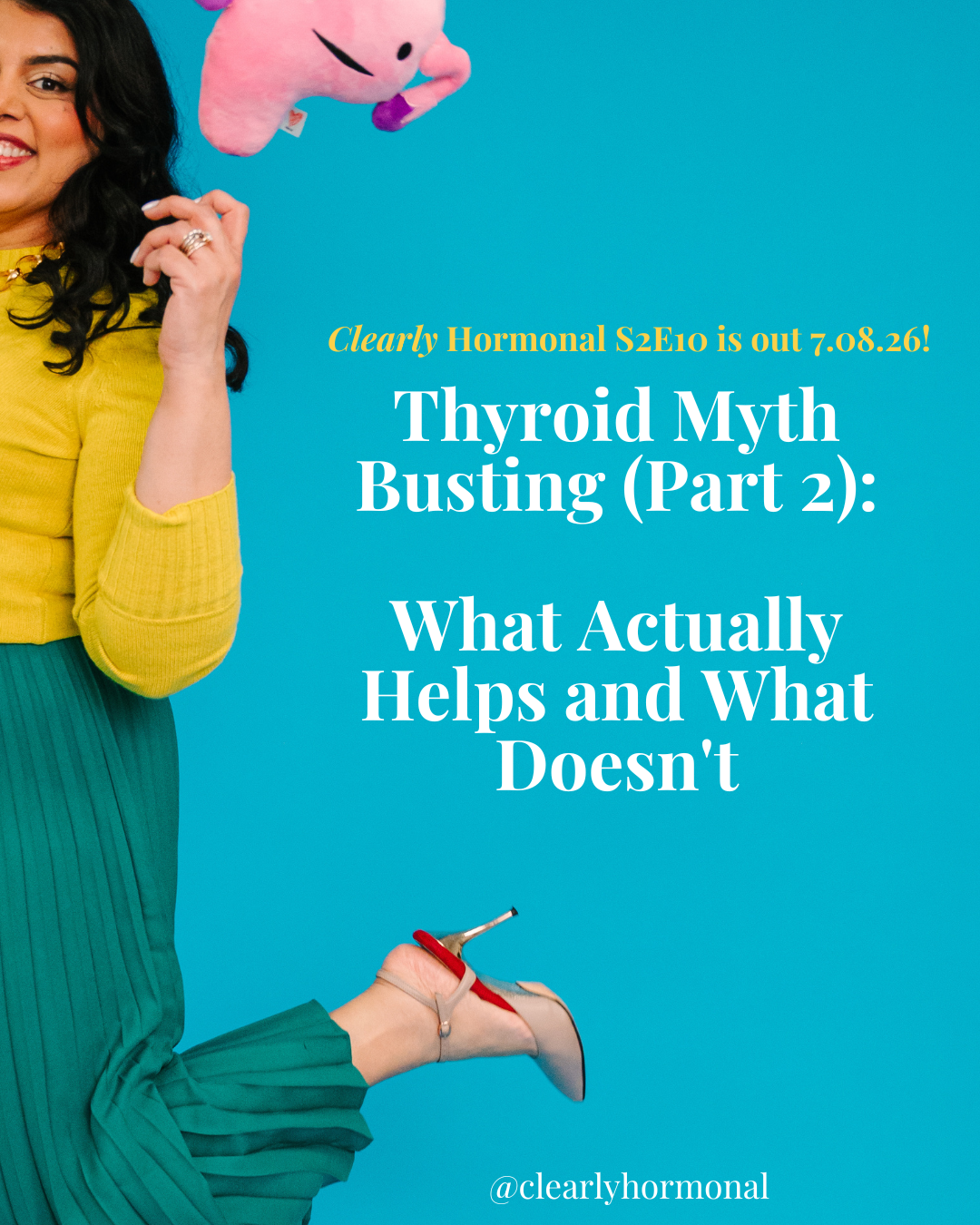
S2E11: Thyroid Myth Busting (Part 2): What Actually Helps and What Doesn't
Welcome to Clearly Hormonal
(formerly Reset Recharge)
Getting diagnosed with Hashimoto's can feel overwhelming, especially after spending five minutes online. Suddenly you're told to eliminate gluten, avoid broccoli, stop eating soy, buy expensive supplements, and ask your doctor for desiccated thyroid. But how much of that advice is actually supported by evidence?
In Part 2 of the Thyroid Myth Busting series, endocrinologist Dr. Komal Patil-Sisodia separates fact from fiction using current medical research.
You'll learn:
Why cruciferous vegetables are not harming your thyroid
When soy actually matters (hint: it's about medication timing)
Who should—and shouldn't—consider a gluten-free diet
Why iodine supplements can actually worsen thyroid disease
Which thyroid supplements have evidence (and which don't)
The truth about desiccated thyroid versus levothyroxine
If you've ever felt overwhelmed by thyroid advice on social media, this episode is your evidence-based guide.
Thyroid Myth Busting, Part 2: What the Evidence Actually Says About Diet, Supplements, and Desiccated Thyroid
By Dr. Komal Patil-Sisodia, MD | Eastside Menopause & Metabolism
If you've recently been diagnosed with Hashimoto's thyroiditis, you already know how fast things can spiral. Join one online support group, and within 48 hours you're being told to cut gluten, soy, dairy, and cruciferous vegetables, start iodine drops, add ashwagandha, and demand desiccated thyroid from your doctor. Your grocery cart looks unrecognizable. Your anxiety is up. And you still feel terrible.
In Part 2 of our Thyroid Myth-Busting series, Dr. Komal Patil-Sisodia steps in as fact-checker for the thyroid wellness space — an area that's largely unregulated and often more harmful than helpful.
Cruciferous vegetables aren't the enemy. Soy is safe — with one timing caveat.
Gluten-free isn't a blanket recommendation.
Iodine supplements are a real risk — even from food.
Not all supplements are created equal.
Desiccated thyroid isn't proven superior.
The bottom line:
Myth 1: Cruciferous Vegetables Hurt Your Thyroid
Broccoli, kale, and Brussels sprouts contain compounds that can interfere with iodine uptake, but only at extreme intake levels combined with iodine deficiency. For most people eating normal amounts, the clinical risk is close to zero. The bigger concern is actually iodine deficiency itself, which is quietly re-emerging in the U.S. as people swap iodized table salt for sea salt or Himalayan pink salt. Pregnant and lactating women, vegans and vegetarians, and Black and Hispanic women are at higher risk.
Myth 2: Soy Is Dangerous for Hashimoto's
A meta-analysis of 18 randomized controlled trials found no significant effect of soy on thyroid hormone levels. The one thing to know: soy can interfere with levothyroxine absorption if eaten within 3–4 hours of taking your medication. Timing matters more than elimination.
Myth 3: Everyone With Hashimoto's Should Go Gluten-Free
For people with Hashimoto's but no celiac disease, the evidence doesn't show meaningful improvement from going gluten-free. But if you have GI symptoms alongside Hashimoto's, testing for celiac disease is worthwhile — and if celiac or gluten sensitivity is confirmed, a gluten-free diet can meaningfully improve levothyroxine absorption and reduce antibody levels.
Myth 4: More Iodine Means Better Thyroid Function
More iodine doesn't mean more thyroid hormone. In people who already get enough iodine (most of the U.S. population), supplementation can trigger either hypothyroidism or hyperthyroidism, especially with kelp supplements or iodine-heavy foods like seaweed snacks. Dr. Patil-Sisodia shares a case of a patient who developed hyperthyroidism from eating seaweed snacks daily — with no other cause identified.
Myth 5: Every Thyroid Supplement Works
Ashwagandha's thyroid benefits are based on very limited data, and it can interact with thyroid medications. B12 deficiency is common in hypothyroid patients and worth correcting, but B12 itself doesn't treat thyroid disease. Low-dose naltrexone lacks robust trial data. Selenium has the most consistent evidence, showing modest reductions in TPO antibodies — though it's still not ready for a universal recommendation.
Myth #6: Desiccated Thyroid Is Superior
Despite popular claims, a well-designed crossover trial found no overall difference in quality of life, cognition, or mood between levothyroxine, levothyroxine plus liothyronine, and desiccated thyroid extract. Desiccated thyroid also comes with meaningful batch-to-batch dose variability, since it's derived from pig thyroid glands without standardized hormone testing before harvest. That said, roughly a third of the most symptomatic patients did report subjective improvement on T4/T3 combination therapy — a reminder that patient-reported outcomes matter, even when lab values look the same.
The Bottom Line
You don't need to fear your salad. You do need to be cautious with your supplement aisle. And any dietary or supplement decision around Hashimoto's is worth a real conversation with your healthcare team — not a scroll through an online support group at midnight.
Missed Part 1? It covers thyroid testing myths, TSH, and what a "normal" thyroid result actually means — go back and give it a listen.
Follow Dr. Komal Patil-Sisodia:@drpatilsisodia on Instagram and TikTok
This content is for educational purposes only and does not constitute personalized medical advice. Please discuss your specific health concerns with your own healthcare provider.